Zipper Lock HD - HQ Wallpaper
- 4.2
- Rating
- 10.00M
- Installs
- Free
- Price
 Analysis by App-foxy
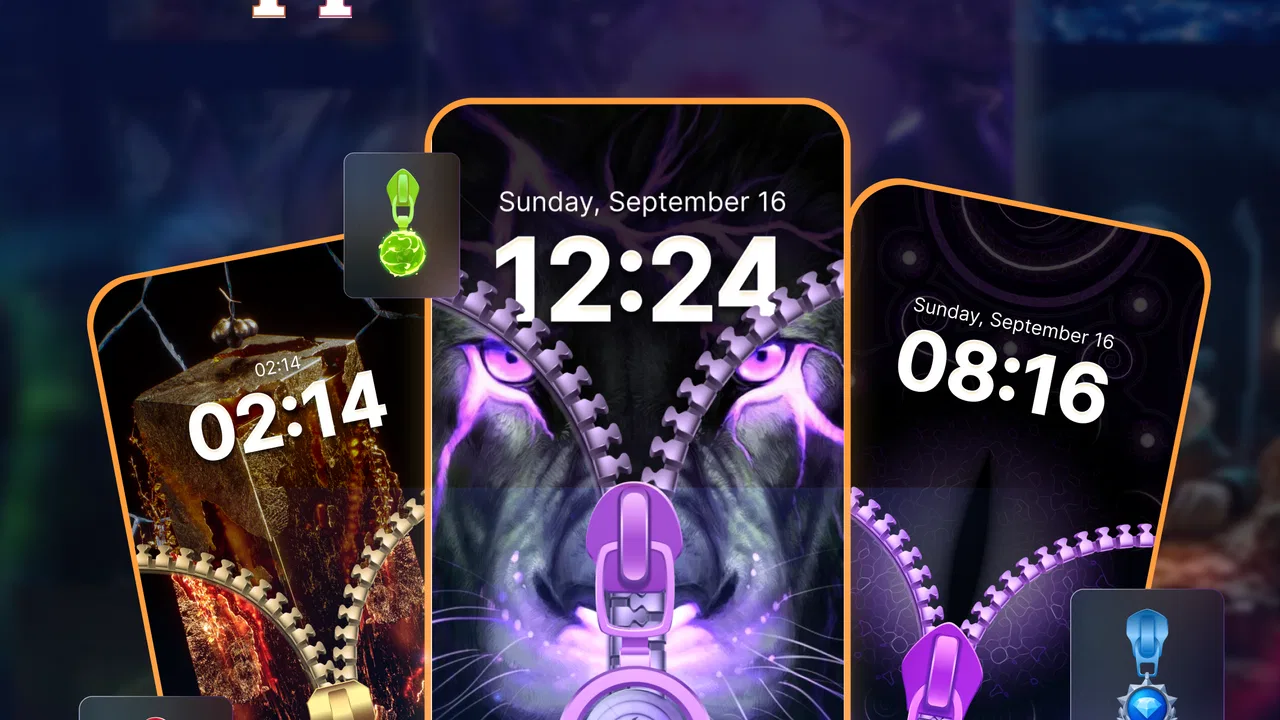
I tried Zipper Lock Screen: Zip Theme as a personalization app, and my first reaction was that it turns an ordinary phone unlock into a small visual interaction. Instead of treating the lock screen as a static background, it uses a zipper-style presentation that you open to reach the phone. That idea is simple, playful, and much more noticeable than changing a wallpaper alone.
The app is free and aimed at Everyone, so it is easy to consider for a child’s device, a shared household phone, or simply a personal handset that feels a little too plain. It comes from Amazic Fun Hub, and its store presence is already substantial, with an average rating of 4.8 from around 13 thousand ratings and more than 5 million installs. Those figures suggest that the concept has broad appeal, although popularity does not remove the need to check whether its visual style suits the person using the phone.
How the zipper idea works in everyday use
The main appeal is the change in routine. Unlocking a phone is something I normally do without thinking, but a zipper animation gives that moment a bit of character. It feels especially appropriate for someone who enjoys decorative themes, playful interfaces, or novelty effects rather than a strictly minimal home screen.
You May Also Like

 Blood Strike: 2.5 Anniversary
Blood Strike’s Loadouts Turn Every Drop Into a Tactical Gamble
A close look at Blood Strike’s custom loadouts: how fast access to signature weapons reshapes its battle royale rhythm, rewards preparation, and narrows the gap between fights.

 Pandora - Music & Podcasts
Pandora’s Music Is Easy to Start, but Harder to Recover
Pandora’s strength is its low-effort path from a seed to a station. Its weak spot is how much confidence it asks you to place in connection, setup, and quiet recovery.

 8 Ball Pool
 Is Built on Rivalries, Rematches, and Routine
A close look at the rivalries, rematches, shared routines, and unanswered safety questions that turn a quick pool match into a persistent mobile community.

 Samsung Music
’s Quiet Strength Is Playing What You Already Own
Its reach comes less from spectacle than from dependable access to a personal library. That simplicity is both the app’s strongest retention engine and its ceiling.

 AccuWeather: Weather Radar
AccuWeather Review: A Quick, Clear Forecast for Everyday Decisions
For everyday plans, the best forecast is the one you can understand quickly. AccuWeather makes rain timing, radar, and local conditions easy to act on, with a few trade-offs.

 Hill Climb Racing
Why Hill Climb Racing Still Turns Crashes Into One More Run
A tiny car, a bumpy hill and one more upgrade: Hill Climb Racing keeps resurfacing because its simple chaos makes every near-miss feel personal.
More From Our News Desk



I would describe it as a visual customization layer, not a replacement for the phone’s entire security system. That distinction matters. The zipper presentation can make the lock screen look different, but users should still think of their device’s normal security settings as the important protection. A fun animation is not the same thing as a secure password, PIN, pattern, or biometric check.
In a realistic household scenario, I can see this being used on a spare phone kept in the kitchen or living room. A family member might pick it up to check a timer, read a message, or make a call, and the zipper effect immediately makes the device recognizable. It can also help a child identify their own phone when several devices have similar cases or wallpapers. That is a practical benefit hidden behind what first looks like a purely decorative feature.
At the same time, the novelty may wear off for someone who unlocks their phone hundreds of times a day. The extra visual step can feel charming at first and slightly repetitive later. I would recommend treating it as a theme to enjoy, not as a productivity improvement. If your priority is the fastest possible access, the standard lock screen will probably remain more efficient.
What I looked for during setup
My advice is to approach setup slowly rather than tapping through every screen automatically. On a personal phone, that means checking how the zipper screen fits with the device’s existing lock method and whether the appearance remains clear when notifications or other system elements are present. On a shared device, it also means deciding who should be allowed to change the theme and who should only use the phone.
This is an important boundary because personalization and access are separate responsibilities. The person choosing the wallpaper does not necessarily need permission to alter the phone’s security method. If I were preparing a household phone, I would let the regular owner handle security settings and use the app only for the visual layer. That keeps the decorative choice from becoming confused with account access.
The app runs on Android 7.0 and later, which makes it suitable for many older phones as well as newer models. That can be useful for a family passing down a device instead of buying a new one. Still, compatibility with the operating system does not guarantee that every manufacturer’s lock-screen behavior will feel identical. Android interfaces vary, so I would test the result on the actual phone before making it the theme for everyone in the home.
The current version is 1.0.7. I would keep the app updated through the normal store process, particularly if the phone receives system updates or changes its lock-screen behavior. A theme that looks fine today may need a quick check after a major Android update. This is not a reason to avoid the app; it is simply a sensible habit with any tool that interacts with a prominent part of the phone interface.
Boundaries matter more on shared phones
On a private device, the decision is mostly aesthetic. On a shared phone, the question becomes who controls the experience. I would agree on one theme with the household rather than allowing every person to change it whenever they pick up the phone. That avoids confusion and keeps the device recognizable.
The app should not be treated as a way to create separate user accounts. A zipper screen does not, by itself, establish different spaces for different people. If several household members use one phone, messages, photos, browser activity, and installed apps still belong to the device’s existing account structure. Anyone considering this for a family handset should set those boundaries in Android first and use the theme only as decoration.
This distinction is particularly useful when a child uses an older phone handed down by a parent. The zipper design can make the device feel personal and welcoming, while the adult remains responsible for the phone’s account, recovery details, and security choices. I like that arrangement because it gives the younger user a visible sense of ownership without pretending that a decorative app provides parental supervision or privacy separation.
For a guest phone, the same principle applies. A playful lock screen can make the device friendlier, but it should not expose private content or rely on appearance as a form of access control. Before handing over a shared device, I would review notifications and account settings separately. The theme can improve recognition, but it cannot solve household privacy problems.
Coordinating the look without creating friction
One useful way to use this app is to coordinate a small group of devices. For example, a family could choose a bright zipper style for the communal phone and a different visual identity for each personal handset. That makes it easier to tell devices apart at a glance, especially when they are charging together on a table.
I would avoid changing the theme during a busy moment, such as before leaving the house or while someone is waiting to make an urgent call. The visual setup is not difficult in principle, but any lock-screen customization can become annoying when several people are trying to make decisions at once. Pick the appearance at a calm time, then leave the everyday operation simple.
There is also a small accessibility consideration. A decorative lock screen should remain easy to understand at a glance. If the zipper graphic is too busy, too dark, or poorly matched with the phone’s text, a user may struggle to see notifications or identify where to interact. I would prioritize clarity over the most elaborate visual option. A theme is successful when it makes the phone pleasant without making basic actions harder.
For older relatives, I would test the interaction personally before installing it on their main phone. Some people enjoy a playful effect, while others prefer a familiar button or biometric prompt with no extra visual treatment. The right choice depends less on age alone and more on comfort with change, eyesight, and how quickly the person needs to reach calls or messages.
Age, trust, and realistic expectations
The Everyone rating makes the app approachable for general household use, but an age label is not a substitute for supervision or a review of the phone’s wider setup. If a child uses the device, I would explain that the zipper is an appearance feature, not a secret barrier. That simple explanation helps prevent a common misunderstanding: a fun screen can look protective while the real security still comes from Android’s configured lock method.
Trust also matters between adults sharing a device. If one person installs the theme, everyone who uses the phone should know what changed. Surprises are rarely helpful when the lock screen is involved. A quick explanation—“the zipper is just the new visual style; the usual phone security still applies”—is enough to keep expectations clear.
I would be cautious about installing it on a phone used for sensitive work if the owner wants a very restrained appearance. Personalization is not automatically unprofessional, but the zipper effect may look out of place during a meeting or when the device is shown to clients. In that situation, a standard wallpaper or the manufacturer’s cleaner lock screen would be the better option.
There is another trust issue with any app that changes how a phone begins an interaction: the owner should be comfortable with the app’s behavior and keep an eye on the overall phone experience. I would install it from the official app source, check the result immediately, and remove it if the lock screen becomes confusing or unreliable. That is a practical test, not a criticism of the concept.
Where it beats ordinary wallpaper apps
A normal wallpaper app changes what I see, but it usually leaves the act of unlocking untouched. This app’s advantage is that it gives the device a recognizable gesture and visual identity. If I want a phone to feel themed rather than merely decorated, the zipper approach is more distinctive.
Compared with a manufacturer’s default lock screen, it is also more playful. Default screens tend to prioritize consistency and speed, while this one prioritizes personality. Neither approach is universally better. The standard option wins for people who want fewer moving parts, while the zipper theme wins for someone who enjoys a little ceremony every time the phone wakes.
It is less suitable as a complete personalization solution than a launcher or a full theme system. Those alternatives can change icons, menus, widgets, and broader navigation. This app is narrower, which is both its strength and its limitation. I appreciate the focused idea because it does not require redesigning the whole phone, but users seeking a unified visual overhaul should look beyond a lock-screen effect.
Its free price lowers the barrier to trying it, especially on a spare or older handset. I would still judge it by daily comfort rather than by the fact that there is no purchase cost. Free customization is worthwhile only if it remains pleasant, clear, and compatible with the way the phone is actually used.
Small practical tests I recommend
Before making the zipper screen the permanent choice, I would perform three quick checks. First, wake the phone in bright daylight and in a dim room to confirm that the design remains readable. Second, unlock it several times in succession to see whether the animation feels smooth enough for your routine. Third, hand the phone to another household member without explanation and watch whether the interaction is immediately obvious.
That last test is surprisingly useful. A theme that seems self-explanatory to the installer may confuse someone who did not choose it. If the other person hesitates, explain the action and decide whether the extra step is worth keeping. On a shared device, ease of understanding matters more than personal enthusiasm.
I would also check the phone after receiving a call or notification. The lock screen has to remain useful when the device is not being unlocked purely for decoration. If the zipper styling competes with important information, I would simplify the surrounding setup or return to the default screen. The best result is a balance between personality and immediate access.
For a child’s device, I would combine the theme with a clear case or a distinctive wallpaper rather than relying on the zipper alone. That gives the child several ways to identify the phone and reduces mix-ups with siblings’ devices. Again, the app works well as one part of a household arrangement, not as a complete family-management tool.
Who should use it and who should skip it
I think it is a good match for someone who wants a cheerful lock screen, enjoys changing the appearance of a phone, or is giving an older device a more personal feel. It is especially appealing when the phone is used casually and the owner values character over the fastest possible unlock.
I would also recommend trying it on a shared household phone when the goal is simple recognition. A distinctive zipper style can help separate one device from another and make a basic handset feel less anonymous. The key is to agree on the setup and keep account and security responsibilities with the actual owner.
I would skip it if you dislike animations, need instant access throughout the day, or prefer the quietest possible interface. I would also choose a conventional lock screen for a work phone that must look formal, or for a user who is easily unsettled by changes to familiar controls. In those cases, the app’s central feature becomes a distraction rather than a benefit.
People looking for stronger privacy separation should skip it as a solution to that problem. It does not replace separate Android profiles, child-safety settings, or a properly configured account. Likewise, anyone expecting a full icon-and-widget makeover will probably be happier with a launcher or a broader theme tool.
My household verdict
After using it, I see Zipper Lock Screen: Zip Theme as a focused personalization choice with a clear personality. It does one main thing: gives the lock screen a zipper-inspired visual interaction. That focus keeps the idea easy to understand, but it also means the app cannot address security, separate users, or complete phone customization.
The app was released on January 8, 2026, and its current version gives it a relatively fresh place in the personalization category. I would still make the decision based on the actual phone and the people using it. A family with a spare Android handset may find it charming and useful; a professional user or someone who values speed may find the same effect unnecessary.
My recommendation is to try it first on a nonessential or shared device, agree on who manages the settings, and keep the phone’s normal security method clearly understood. If the zipper makes the device easier to recognize and more enjoyable without slowing anyone down, it has earned its place. If it creates hesitation every time the screen wakes, the default lock screen is the better tool.
Overall, I like the app most as a small household-friendly touch rather than a serious security feature. Its real strength is personality with a practical visual identity, while its main trade-off is that the same extra character can become repetitive or inconvenient for people who want a completely direct route into their phone.
FAQs for Zipper Lock HD - HQ Wallpaper
01What is Zipper Lock Screen: Zip Theme and how does it work?
Zipper Lock Screen: Zip Theme is a unique app that allows users to customize their phone's lock screen with creative zipper designs. When you swipe down on the zipper, it unlocks your device. This app provides a fun and personalized way to unlock your phone, integrating seamlessly with your existing security settings.
02Is Zipper Lock Screen: Zip Theme compatible with all Android and iOS devices?
Zipper Lock Screen: Zip Theme is compatible with most Android devices running version 4.0 and up. However, it is important to check the app's compatibility with your specific device model before downloading. Currently, the app is not available for iOS devices, but updates may change this in the future.
03Does using Zipper Lock Screen: Zip Theme affect my phone's security?
No, Zipper Lock Screen: Zip Theme does not compromise your phone's security. It works in conjunction with your existing security settings, such as PIN, pattern, or fingerprint. The app adds an additional layer of fun without altering the core security functions of your device.
04Can I customize the zipper styles and themes in the app?
Yes, Zipper Lock Screen: Zip Theme offers a variety of zipper styles and themes to choose from. Users can customize their lock screen with different colors, patterns, and backgrounds to suit their preferences. Regular updates to the app also introduce new design options and features.
05Does Zipper Lock Screen: Zip Theme consume a lot of battery or resources?
Zipper Lock Screen: Zip Theme is designed to be lightweight and efficient, ensuring minimal impact on battery life and system resources. While any app running in the background can use some battery, the impact of this app is generally negligible. It's optimized for performance to provide a smooth user experience.
Pros
- Customizable themes enhance personalization.
- Simple interface for easy navigation.
- Battery-friendly and efficient performance.
- Fun and engaging lock screen design.
- Frequent updates with new features.
Cons
- Ads can be intrusive at times.
- Limited free themes available.
- Some features require in-app purchases.
- Occasional lag on older devices.
- Not compatible with all Android versions.

Zipper Lock HD - HQ Wallpaper
Gallery